How Much Does It Cost to Open a Coffee Shop in 2026
You have probably had the thought while holding a $7 latte: “I should just open one of these.” You are not alone. Every year, thousands of Americans turn that exact thought into a business plan. Some of them go on to build thriving neighborhood cafes. Others run out of money before they ever see their first rush hour.
The difference between those two outcomes usually has nothing to do with the quality of the coffee. It almost always comes down to one thing: understanding your real startup costs before you sign anything.
This guide walks you through How Much Does It Cost to Open a Coffee Shop in 2026. You will get practical ranges, examples by concept type, and decision strategies that help you protect cash flow and plan for profitability, not just opening day.
Quick cost snapshot for 2026
- Small kiosk or coffee stand inside an existing building: about 60,000 to 140,000
- Small cafe with seating and a full espresso bar: about 120,000 to 300,000
- Drive thru coffee stand: about 160,000 to 400,000
- Larger sit down coffee shop with kitchen or heavy food program: 250,000 to 600,000 or more in high cost markets
These ranges assume a typical independent shop. A franchise can add major upfront fees and require higher build standards.
Why Is It Important to Understand Coffee Shop Startup Costs?
The most common killer of new businesses is not bad coffee. It is cash flow. The United States Small Business Administration warns that running out of cash and undercapitalization are leading causes of small business failure. Many owners can build a beautiful cafe but cannot survive the first slow season, the first equipment repair, or the first rent increase.
There is also a difference between “I can open” and “I can operate.” A shop that opens with no buffer may be forced to cut staffing, reduce marketing, and buy lower quality ingredients. That hurts customer service and retention, and it becomes a loop that is hard to escape.
A practical benchmark used by many lenders and experienced operators is to plan for a working capital cushion of at least 6 months of operating expenses. Some markets and concepts need closer to 12 months, especially if you have seasonal demand.
Expert insight from the field: Most profitable cafes treat budgeting as a system, not a one time checklist. They build a cost model early, update it after each vendor quote, and do not sign a lease until the build out plan and permitting path are clear.
What Are the Main Cost Categories When Opening a Coffee Shop?
To understand how much does it cost to open a coffee shop, separate costs into four simple buckets:
1. Startup costs
One time costs before opening, such as build out, equipment, deposits, initial inventory, and professional fees.
2. Ongoing operating costs
Recurring monthly costs, such as rent, payroll, utilities, restocking, POS software, and maintenance.
3. Fixed expenses vs variable expenses
Fixed expenses include rent, insurance, many software subscriptions, and some loan payments.
Variable expenses include coffee beans, milk, cups, syrups, and credit card processing fees.
4. One time investments vs recurring investments
Some items repeat occasionally, like replacing grinder burrs, deep servicing espresso machines, or refreshing seating and interiors.
This structure also helps you build a cleaner cafe costs breakdown in your coffee shop business plan startup costs section.
How Much Does Location Impact Coffee Shop Costs in the U.S.
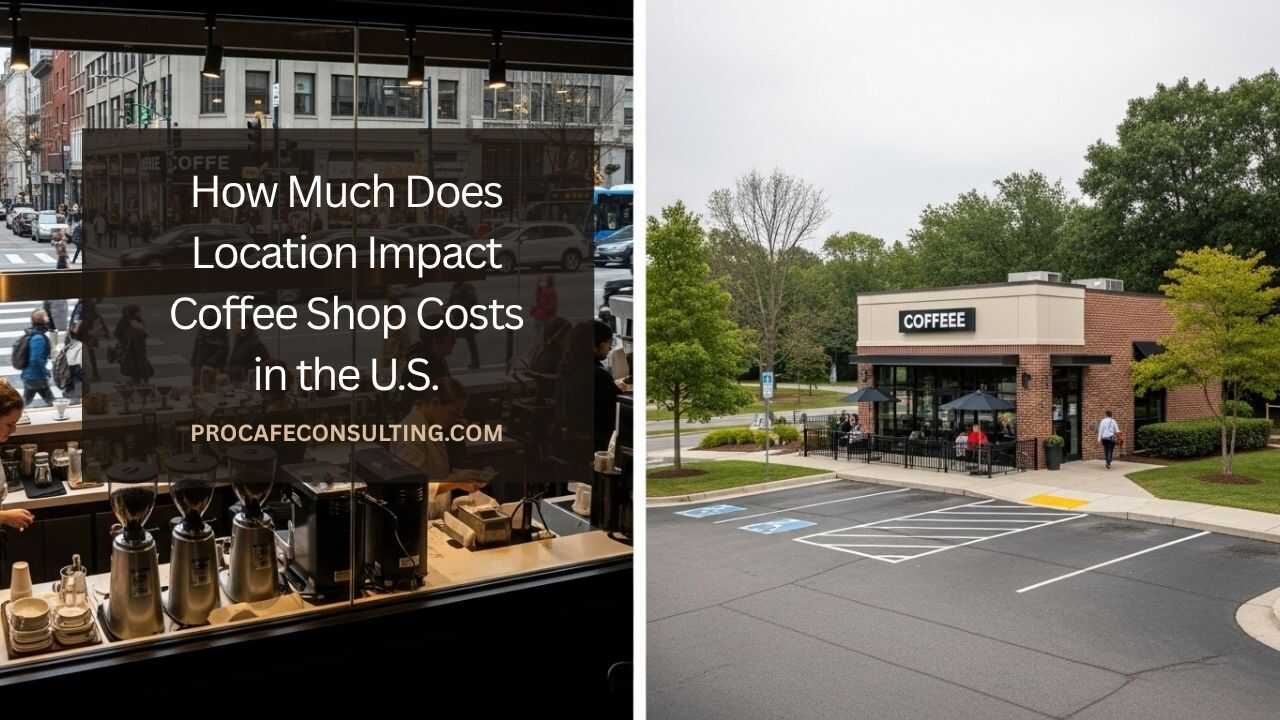
Location influences rent, build out scope, and how much marketing you need to buy attention.
Urban vs suburban vs rural rent realities
In dense urban corridors, you typically pay higher rent per square foot but benefit from foot traffic and public transit. In suburban markets, you may get more space for the money, better parking, and strong morning traffic patterns, especially for drive thru coffee stand models. Rural markets can offer low rent, but demand can be inconsistent and staffing may be harder.
Also Read: How Much Do Coffee Shops Make?
High cost states vs affordable markets
High cost states like California and New York can push both rent and labor costs upward. More affordable regions may reduce overhead, but you still need a location with a strong match between your concept and your customer base.
The foot traffic vs rent trade
A cheaper lease in a low visibility area can become expensive if you must spend heavily on promotions to get customers in the door. A premium corner can sometimes be cheaper in total cost if organic demand is high.
Practical rule: Choose a location where your forecasted daily tickets can realistically cover rent, payroll, and food and beverage costs with margin left over.
How Much Does It Cost to Lease or Build a Coffee Shop Space?
This is where many budgets break.
Common lease related startup costs
- Security deposit and advance rent: often 2 to 4 months total depending on the landlord and your credit profile
- Utility deposits: power, water, internet
- Professional fees: broker fees if applicable, plus legal review
Build out and renovation costs
Build out costs can range from 50,000 to 300,000 and beyond, depending on the condition of the space and your local code requirements. The biggest cost drivers include:
- Plumbing for sinks, floor drains, mop sink, and water filtration
- Electrical upgrades for espresso machines, grinders, refrigeration and coolers, and lighting
- HVAC and ventilation if you add a kitchen or heavy food program
- Restrooms and ADA compliance upgrades
- Interiors, seating, counters, and finishes
Drive thru vs dine in differences
A dine in cafe often spends more on seating, guest restrooms, and ambiance. Drive thru often spends more on site work, exterior signage, menu boards, lane configuration, and weather protected service windows.
Do not forget the Certificate of Occupancy process. Inspections and code compliance corrections can add both time and money.
What Equipment Do You Need and How Much Does It Cost?
Most coffee shop startup costs include a serious equipment line item. A realistic range for coffee equipment is $20,000 to $100,000 or more.
Core espresso and brewing equipment
- Espresso machine: 6,000 to 25,000 depending on capacity and brand
Common premium brands include La Marzocco and Victoria Arduino Eagle One - Espresso grinder and retail grinder set: 3,000 to 10,000 total
Trusted options include Mahlkonig EK43 and Mazzer Robur S Electronic - Batch brewer: 800 to 3,500
- Water filtration system: 600 to 3,000
- Refrigeration and coolers: 2,000 to 15,000 depending on size and configuration
POS system and technology
A modern POS System is not optional. Hardware and setup might run 700 to 2,500 upfront, plus monthly POS software fees. Square is a common starting point for smaller cafes, while larger multi unit concepts often choose enterprise systems with deeper reporting.
Other equipment owners forget to budget
- Ice machine for cold drinks: 1,500 to 6,000
- Dishwasher or glass washer if needed: 2,000 to 8,000
- Blender station: 300 to 1,500
- Smallwares: tampers, pitchers, knock box, scales, thermometers, and cleaning tools: 500 to 2,000
If you plan to roast coffee, industrial coffee roasters can add 20,000 to 150,000 plus ventilation and permitting. Many new owners start by partnering with a local coffee roaster instead.
How Much Should You Budget for Inventory and Supplies
Inventory costs depend on menu size and volume. Expect an initial inventory and supplies budget of about 3,000 to 12,000.
Typical opening inventory
- Coffee beans and retail bags
- Milk, alternative milks, cream
- Syrups, sauces, tea
- Cups, lids, sleeves, napkins, stirrers
- Cleaning chemicals and sanitizer supplies
- To go packaging if you sell food
Also plan monthly restocking. Many shops discover too late that cups and milk can become a cash flow stress if ordering is not planned weekly.
Licenses, Permits, and Insurance Required in the U.S.
Requirements vary by state and county, but most coffee shops need:
- Business license and local business tax registration
- Food Service License and health department permit
- Sales tax permit
- Sign permit for outdoor signage
- Music licensing if you play music in store
- Fire department inspection and occupancy approval
- Liquor license if you serve beer, wine, or spirits
Insurance commonly includes general liability, property coverage, and workers compensation. Insureon publishes small business insurance price benchmarks and often shows general liability medians in the tens of dollars per month for many small food businesses, though your rate depends heavily on revenue, payroll, and coverage limits.
Operating Costs and Growth Expenses
What Are the Monthly Operating Costs of a Coffee Shop
A simplified monthly cost model usually includes:
- Rent and common area fees
- Utilities: electric, gas, water, trash, internet
- Payroll and payroll taxes
- Inventory and supplies restocking
- Credit card processing fees
- POS software subscriptions and other tools
- Maintenance and repairs
- Marketing costs
A small cafe might run 15,000 to 45,000 per month in total operating costs depending on location, hours, and staffing model.
How Much Do Staffing and Payroll Cost in the U.S.?
Labor is often the largest controllable expense. Wages are state dependent and city dependent.
For a data point, the US Bureau of Labor Statistics tracks wages for roles that include counter attendants in coffee shops and similar food service settings. National wages vary widely by region, and competition can push rates higher than minimum wage to retain skilled staff.
Also budget for:
- Training time and trainer hours
- Uniforms and onboarding
- Scheduling inefficiencies during the first months
- Retention strategies, since turnover in food service is historically high
How Much Should You Spend on Marketing and Branding?
In 2026, marketing is local first and trust driven. Customers decide quickly based on reviews, photos, and convenience.
A practical marketing budget for many independent shops is 3 to 8 percent of revenue, with heavier spending in the first 90 days.
What Other Ongoing Expenses Should You Expect
Owners should expect ongoing costs beyond the obvious:
- Preventive maintenance for espresso machines and refrigeration system
- Grinder burr replacement and water filter changes
- Linen service if you use it
- Equipment replacement reserves
- An emergency fund for unexpected repairs or short slow periods
Profitability and Smart Growth
How Can You Reduce Costs Without Compromising Quality
You can lower your cost to open a coffee shop without cutting corners that customers feel.
Start with a tight menu and execute it perfectly.Lease some equipment if cash is tight, especially for secondary items.Buy a strong used espresso machine from a trusted dealer with warranty and service access.Work with a local coffee roaster for better pricing and training support.Use energy efficient machinery where it pays back, especially refrigeration and HVAC.Schedule labor to demand using POS reporting so you do not overstaff slow hours.
What Makes a Coffee Shop Profitable in Today Market
Coffee shop margins depend on controlling three big numbers: labor, cost of goods, and rent.
Common operator targets:
- Beverage cost of goods: often 18 to 28 percent depending on milk usage and waste control
- Labor: often 25 to 40 percent depending on service style and wage market
- Occupancy cost: often targeted under 10 percent of sales for many independent cafes, though high traffic locations may run higher
Profit margin on coffee can be strong on espresso drinks, especially when customers add flavors, alternative milks, extra shots, or pastries. High margin add ons and good upselling scripts help. Customer retention is just as important. A loyalty program and consistent customer service can make revenue more stable and reduce marketing spend over time.
If you are asking how much coffee shops make, the truthful answer is: it varies widely. Some small cafes struggle to pay the owner early on, while strong locations can generate healthy owner income. Many restaurant trend reports, including those published by Toast, show that net profit in food service is often single digit. Coffee shops can outperform the average when operations are tight and beverage mix is strong.
Thinking About Opening a Coffee Shop? Let’s Make Sure You Get It Right.
At ProCafe Consulting, we have worked with aspiring café owners across the United States to help them turn a dream into a real, financially sound business. Our coffee shop consulting and training programs walk you through every stage — from developing your concept and building your financial projections, to sourcing equipment, training your first barista team, and launching with the kind of plan that actually holds up in the real world.
We have seen exactly what separates cafes that thrive from ones that close before their first anniversary. If you are serious about opening a coffee shop and want expert guidance to do it right, we would love to talk.
Conclusion: Is Opening a Coffee Shop Worth the Investment
So, how much does it cost to open a coffee shop in 2026? For most independent owners, the realistic range is about 80,000 to 300,000, with higher totals in premium real estate markets or build-from-scratch drive-thru projects.
Opening a coffee shop can absolutely be worth it, but only when you budget honestly, protect working capital, and build an operation designed for repeat customers. Great coffee gets them in once. Consistent service, smart costs, and strong local presence keep them coming back.
FAQs
Can you open a coffee shop with 50,000 in the U.S.?
Yes, but usually only as a very small kiosk, mobile coffee cart, or by taking over an existing cafe space with usable equipment and minimal renovation needs. A full build out cafe rarely works at this budget without high risk.
How much money do you really need to start a coffee shop?
Many owners need 120,000 to 300,000 to open a cafe with seating, depending on rent, build out, and equipment choices. The safer number includes a working capital reserve for 6 to 12 months.
How much profit do coffee shop owners make annually?
Owner income varies widely by location and volume. Some owners take little salary in year one while building the business. Established shops with strong margins can support an owner salary, but it depends on net profit after labor, rent, and debt.
What percentage of coffee shops fail in the first year?
Exact coffee shop failure rates are hard to measure nationally, but the US Bureau of Labor Statistics shows that about 20 percent of new establishments across industries do not survive the first year, and food service categories tend to have higher churn than many other sectors. Proper capitalization and planning improve survival odds.
How much does it cost to open a drive thru coffee stand?
A drive thru coffee stand commonly costs $160,000 to $400,000 depending on whether you lease an existing structure or build from the ground up, and depending on site work, lanes, and permitting.
References & Data Sources
- IBISWorld — Coffee & Snack Shops in the U.S. Industry Analysis, January 2026. Revenue: $75.5 billion; 94,498 businesses.
- World Coffee Portal — Project Café USA 2026. U.S. branded coffee shop market: $58.5 billion, 45,277 outlets.
- Gitnux — Coffee Shop Industry Statistics & Trends, December 2025. Labor costs (35–45% of operations), net margins, barista wages, failure rates.
- Toast — How Much Do Coffee Shops Make, 2026. Monthly operating costs 75–85% of sales; barista wages; break-even modeling.
- Bean & Brew Tech — Coffee Shop Challenges 2026. Espresso machine cost ranges; tipping trends; staffing data.
- MenuTiger / Investopedia — Sit-down café startup costs up to $275,000.
- U.S. Small Business Administration — SBA 7(a) Loan Program. sba.gov
- Bureau of Labor Statistics — Food Service Worker Wages by State, 2025.