How to Make a Coffee Shop Profitable in 2026
Here is something that catches a lot of cafe owners off guard: you can serve hundreds of drinks a day and still barely break even.
A packed queue at 8 am feels like success. But if your pricing is soft, your labor runs too high, and half your pastries end up in the bin each night, that busy morning is not turning into profit. It is just turning over money.
If you want to make a coffee shop profitable, busy is not the goal. Margin is.
This guide breaks down exactly what drives coffee shop profitability, where most cafes leak money, and what you can do right now to keep more of every dollar you earn.
What Makes a Coffee Shop Profitable?
Profitability is simple in theory: you earn more than you spend.
In practice, it means managing the gap between your revenue and the real cost of running the shop. That includes espresso, milk, cups, food, wages, rent, utilities, and every little thing in between.
A profitable coffee shop does four things well:
- Prices every item based on actual cost, not guesswork
- Controls labor so wages match demand, not habit
- Reduces waste through systems and consistency
- Brings customers back often enough to make acquisition cost irrelevant
The shops that struggle usually focus on sales and ignore what sits underneath. You cannot grow your way out of a pricing or cost problem. You fix the foundation first.
How Profitable Is a Coffee Shop, Really?
Cafe profit margins are often tighter than people expect before opening a coffee shop.
Espresso drinks can carry strong margins when you cost them properly. A latte made with quality milk and a precise espresso dose might cost you under $1.50 to produce and sell for $5.00 or more. That looks healthy on paper.
But once you factor in labor, rent, packaging, waste, utilities, and card processing fees, the net profit picture changes fast. Many independent coffee shops operate on net margins between 3 and 10 percent. Some do better with tight operations and strong average order value. Some do worse and never figure out why.
The answer to whether a coffee shop can make money almost always comes down to cost control and pricing discipline, not foot traffic alone.
Are You Tracking the Right Numbers?
Most cafe owners check their daily sales. Fewer check the numbers that actually explain whether the business is healthy.
Start tracking these every week:
1. Sales
Total revenue by day and by hour. This tells you when your shop is productive and when it is not.
2. Cost of goods sold
Every ingredient, cup, lid, bag, and food item. Your COG should align with your pricing. If it creeps up, your margin shrinks.
3. Labor cost
Wages as a percentage of sales. Many operators aim to keep this between 25 and 35 percent, but your target depends on your model, concept, and location.
4. Average order value
Pull this from your POS system weekly. A small lift here makes a significant difference to your P and L over a month.
5. Waste
Track spoilage and over portioning. Waste is profit you already paid for and threw away.
6. Best selling items
Know your top ten sellers by volume and by margin. They are not always the same list.
If you run accounting through tools like Xero or MYOB, connect your sales data so you can review your full P and L regularly, not just at tax time.
Is Your Menu Priced for Profit?
This is where most cafes leave money on the table without realizing it.
Many owners price based on what competitors charge or what feels fair. That approach ignores the actual cost sitting behind each drink and food item.
Cost every item properly
Here is how to cost a simple latte:
- Espresso dose: around 18 grams from a bag costing $18 per kilogram works out to roughly $0.32
- Milk: about 8 ounces of dairy milk from a $4 gallon jug costs around $0.25
- Cup and lid: $0.25 to $0.40 depending on your packaging
- Syrup if used: $0.20 to $0.35 per serve
- Sleeve, napkin, and POS card fee: add a few cents for accuracy
Your total production cost might sit around $1.10 to $1.40. If you sell that latte for $4.50, you carry a decent margin. If you sell it for $3.80 because you wanted to stay cheap, that margin shrinks fast before wages and rent even enter the picture.
Review pricing often
Costs change. Milk prices move. Supplier rates shift. Wages increase.
Review your prices at least once or twice a year. Small and gradual increases feel natural to customers. One large jump after years of silence feels like a shock.
Charge for add ons
Extra shots, syrups, oat milk, almond milk, and other upgrades carry real costs. Charge for them clearly. Add them to your POS modifiers and display them on your menu board.
If 40 percent of your customers choose oat milk and you absorb that cost, you are subsidizing a significant margin loss every single day.
Which Coffee Menu Items Make the Most Money?
Not every item on your menu earns equally.
High margin drinks typically include espresso based drinks made with dairy milk and simple syrups. A well costed flat white or cappuccino often delivers stronger margins than a complex matcha latte or blended drink that requires more ingredients and more time.
Add ons and upgrades are among the easiest profit improvements available. An extra shot for $1 might cost you $0.32. A syrup add on for $0.80 might cost you $0.20. These are high margin additions that require almost no extra effort.
Pastries, snacks, and bundles carry tighter margins than espresso drinks, but they lift average ticket size. A coffee plus pastry bundle at a slight discount still generates more gross profit per transaction than coffee alone.
Know your numbers by item. Your POS system can usually show sales volume. Pair that with your costing sheet and you will see quickly which items deserve promotion and which deserve removal.
How Can Menu Engineering Improve Profit?
Menu engineering is the practice of designing your menu to guide customers toward your most profitable choices.
Highlight best margin items
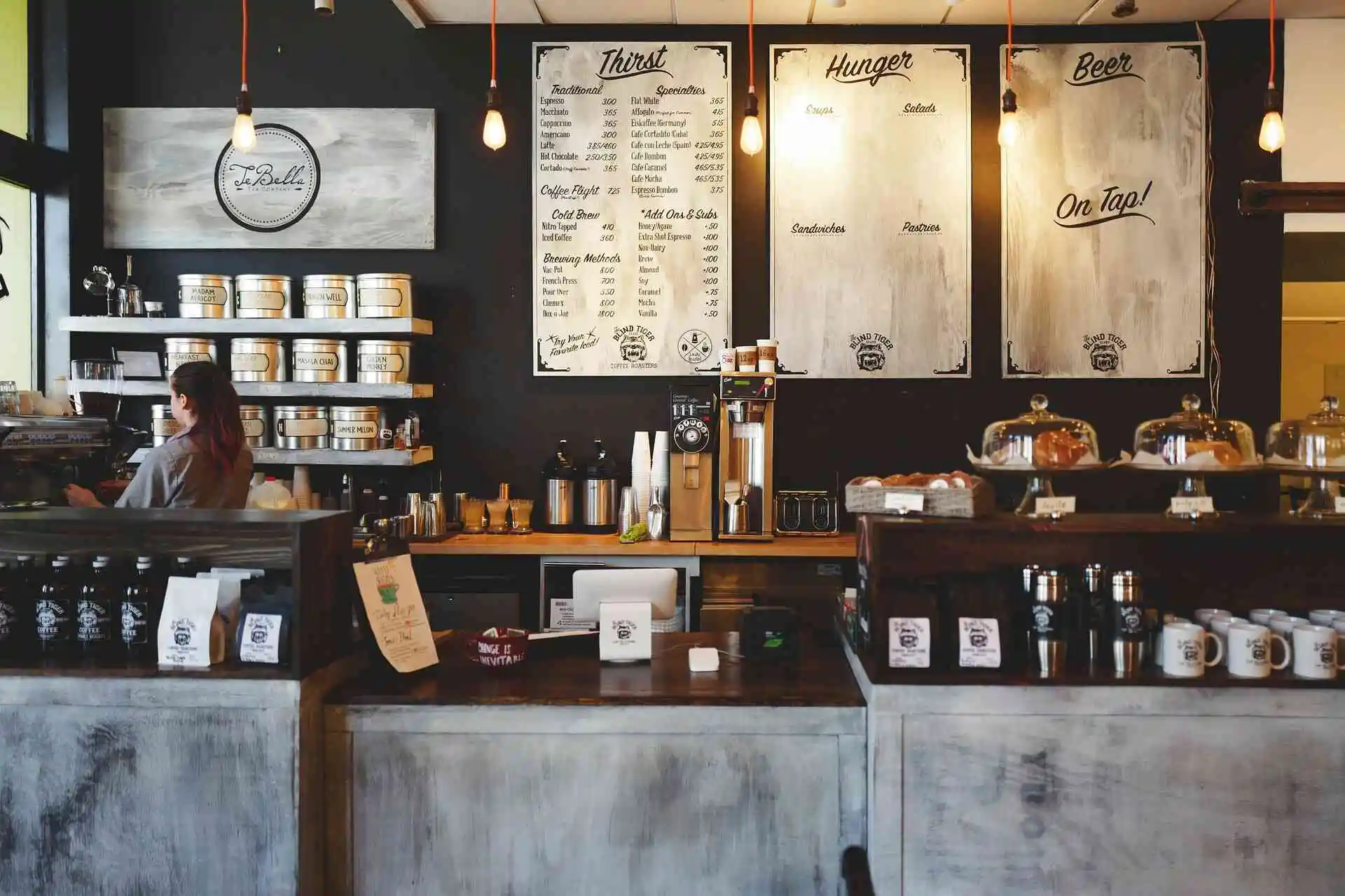
Place your most profitable drinks in prominent positions on your menu board. The upper left and center areas get the most attention. Use them well.
Remove weak sellers
A menu item that sells five times a week and uses a specialty ingredient that expires creates waste, prep complexity, and staff confusion. Cut it. A tighter menu improves speed, reduces waste, and makes ordering easier for customers.
Keep the menu focused and easy to navigate
Too many options slow customers down, which slows your line. A focused menu builds confidence and reduces ordering friction, which helps during peak hours when every second matters.
How Do You Increase Average Order Value?
You do not always need more customers to improve coffee shop profit. Sometimes you just need slightly bigger tickets from the customers already in front of you.
Upselling works when it feels natural. Train your baristas to suggest, not pressure. “Would you like to add a croissant?” is simple and often converts.
Combo deals create a reason to spend more. A coffee plus pastry bundle at $8.50 instead of $5.00 coffee and $3.50 pastry separately gives customers a perceived deal while you raise the ticket.
Seasonal specials build excitement and give customers a reason to revisit. A limited winter drink or a summer cold brew promotion creates urgency and often carries a premium price point that customers accept willingly.
Better in store placement matters more than most owners think. Put grab and go items, bottled drinks, and snacks near the register where customers see them while they wait.
Practical math: If you serve 200 customers per day and 30 percent add a $3 pastry, that is $180 extra revenue daily. At a 55 percent margin on the pastry, you add roughly $99 gross profit per day before you attract a single new customer.
Where Are Profits Usually Lost?
Most coffee shop profit problems trace back to a small number of recurring issues.
Waste is the most invisible. Expired food, over portioned syrups, and inconsistent espresso doses all cost money you already spent. Waste rarely shows up loudly. It drains quietly.
Overstaffing during slow hours turns a decent week into a difficult month. If three staff members stand around from 2pm to 4pm and that shift averages 12 customers per hour, you carry labor that produces nothing.
Underpricing is the most common mistake and the hardest for owners to fix because it feels risky. Raising prices by $0.30 across your menu often feels scarier than it is. Most loyal customers accept reasonable increases when the quality and experience stay consistent.
Too many low margin products spread your team thin and reduce focus. If your food program adds cost, complexity, and waste without meaningful profit, it might be hurting more than it helps.
How Can You Reduce Costs Without Hurting Quality?
Reducing cost does not mean reducing quality. It means running tighter systems.
Better scheduling starts with your hourly sales data. Pull it weekly. Staff your peak hours with your best baristas. Reduce coverage during slow periods. Watch early clock ins and extended breaks.
Inventory control prevents over ordering. Order based on actual sales patterns, not habit. Date stock clearly. Rotate it properly.
Recipe consistency protects both quality and cost. When every barista builds a latte the same way, you control taste and you control COG. Use recipe cards, weigh your doses, and train to the standard.
Smarter supplier management means reviewing your supplier terms at least once a year. Ask about volume discounts. Compare pricing on packaging. Even small savings on cups and lids add up at high volume.
Why Do Repeat Customers Matter So Much?
A regular who visits four times a week costs you nothing to acquire after the first visit.
Compare that to a new customer who found you through an ad, a promotion, or a recommendation. Getting that new customer costs time and often money. A loyal regular just shows up.
Loyalty programs
A simple stamp card or digital loyalty program through your POS keeps customers coming back. Even a basic “buy nine, get one free” creates a behavioral habit. The free coffee costs you perhaps $1.50 in production. The loyalty it builds earns far more.
Better service
Fast, consistent, friendly service creates regulars more reliably than any promotion. Customers remember how quickly you served them and whether the barista acknowledged them.
Local marketing
Google Business profile updates, social posts, and community involvement all increase foot traffic from nearby customers. A nearby office that discovers you becomes a reliable morning account.
Consistent customer experience
Quality consistency matters more than perfection on one visit. If your latte tastes great on Monday and disappointing on Thursday, customers stop making assumptions about returning.
Simple Ways to Make a Coffee Shop More Profitable
If you want to move fast, focus here first:
- Raise prices carefully on your best sellers
- Add clear charges for all upgrades and add ons
- Introduce one coffee plus food bundle
- Pull your hourly sales data and tighten scheduling
- Cost your top 15 menu items and identify your weakest margins
- Track waste weekly and train staff on portion control
- Launch or refresh a simple loyalty program
- Remove two to three menu items that create waste and low volume
None of these require new equipment, a rebrand, or a bigger location. They require attention, consistency, and honest numbers.
Final Thoughts
A coffee shop hardly thrives on high volume sales alone.
Profit-generating shops are those where the owner knows his or her figures, prices with confidence, controls waste, matches labor to demand, and gives the customer ample reason to return.
Profit doesn’t come from making more sales.
Start with what you can measure and control this week. Cost your menu. Review your labor. Simplify what is not working. Then build from there.
FAQs
Q: What is considered a good profit margin for a coffee shop?
A: A reasonable net profit margin for coffee shops is typically from 3% to 10%.
Q: What items are most lucrative in a coffee shop?
A: Espresso-based items, regular drip coffee, flavor syrups, and extra shots are the most profitable.
Q: How do I increase the profitability of my coffee shop without increasing prices?
A: The profit can be raised by not allowing the staff to upsell to the customer, by strictly controlling wastage of materials, and by keeping the labor organized.
Q: Why is my coffee shop always full but not very profitable?
A: Customers do not equate traffic to profits when your menu, ingredient waste, or labor terms are out of balance.
Q: Would it result in greater profitability for a coffee shop if food was served there?
A: Absolutely, if a coffee shop offers some limited fare with very little preparation, such as pastries, it will significantly boost the average ticket price and overall profit.