How to Create a Coffee Shop Menu: Complete Guide + Templates (2026)
Your coffee shop menu is your silent salesperson. Research shows that roughly 30% of a café’s revenue comes directly from how the menu is structured, not just what is on it. Most new café owners get this wrong. They add too many items, price without strategy, and wonder why margins stay thin.
This guide walks you through exactly how to create a coffee shop menu that speeds up service, protects your margins, and keeps customers coming back. You will get a step by step process, 15 real menu ideas you can use today, and a free checklist to review before your first print run.
Whether you are opening your first café or rebuilding an existing menu that is not performing, this is the system that works.
The 7 Essential Parts of Any Coffee Shop Menu
Before you design a single item, understand what every effective café menu is built from. Skip any of these and your menu starts working against you.
1. Header and Branding: Your logo, café name, and a short tagline go at the top. This is not decoration. It sets the tone for every price a customer sees after it. A polished header makes a $5 latte feel reasonable. A cluttered one makes a $3.50 coffee feel expensive.
2. Core Coffee Drinks: This is the backbone of your menu. Espresso, Americano, latte, cappuccino, cold brew. These five alone will account for the majority of your daily transactions.
3. Non Coffee Drinks: Iced tea, lemonade, matcha, chai. You need at least two solid options for customers who do not drink coffee. Ignoring this group costs you real revenue every single day.
4. Food Pairings: Pastries, breakfast items, light bites. The rule here is simple: food should share ingredients with your drinks wherever possible. Same butter. Same sugar. Shared ingredients mean less waste and better margins.
5. Specials and Limited Time Offers: A seasonal section keeps your menu fresh without rebuilding it from scratch. Pumpkin lattes in fall, iced hibiscus in summer. These items also carry your highest margins if priced correctly.
6. Pricing Strategy: Not just numbers. Pricing is psychology, positioning, and profitability rolled into one section. This step gets its own breakdown below because most café owners underprice and never realize it.
7. Legal Notes and Allergen Information: Allergen disclaimers, customization options, and any required local disclosures. Small section, big legal protection.
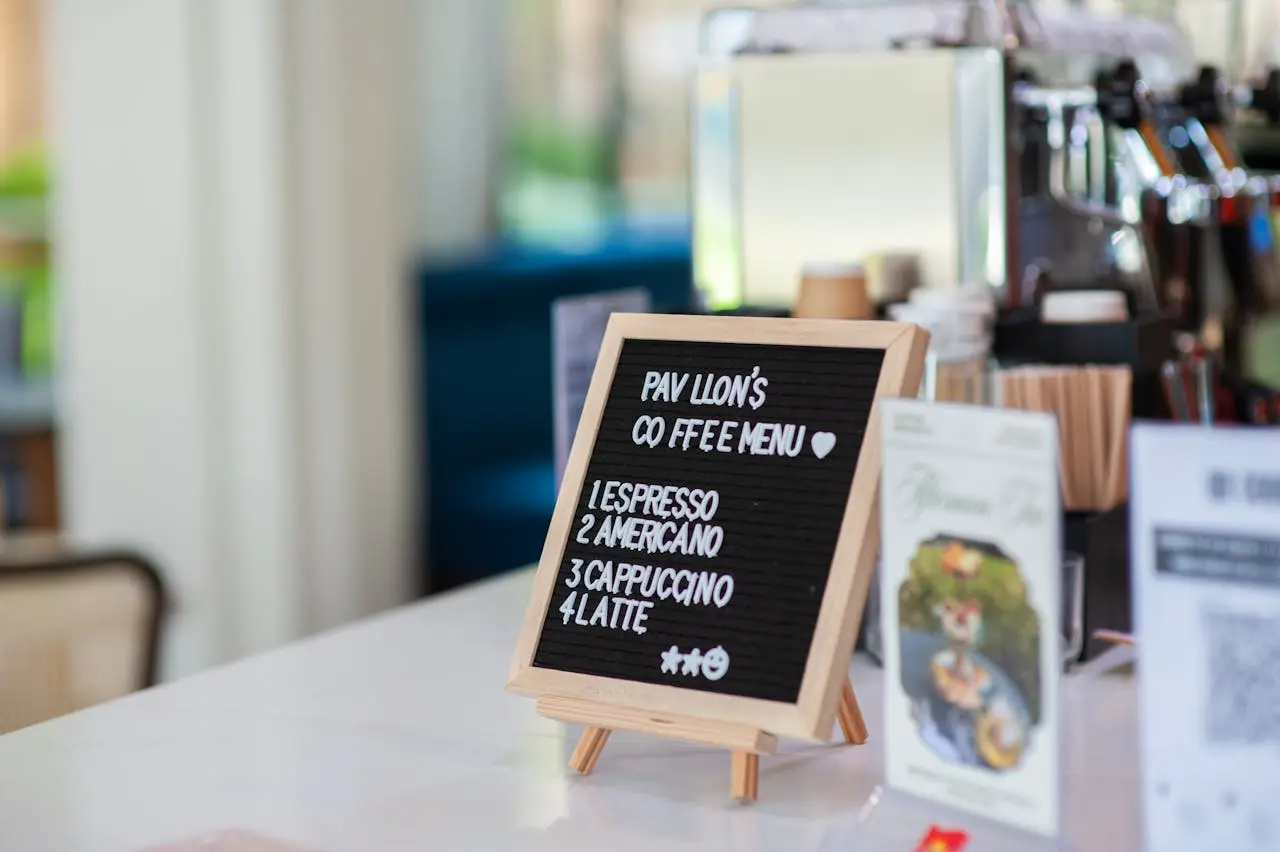
Step by Step: How to Build Your Coffee Shop Menu?
Step 1: Start With Your Coffee Core (5 to 8 Drinks Maximum)
Pick your anchor drinks first: espresso, Americano, latte, cappuccino, cold brew. Then add one signature drink that is unique to your café.
That is your starting lineup. Six drinks.
The reason you cap it here is operational. Every drink you add beyond your core menu increases training time, slows your baristas down, and raises your risk of inconsistency. Most cafés generate 80% of their revenue from just five items. Build those five perfectly before you add anything else.
Your signature drink matters more than people realize. It gives customers a reason to talk about your café specifically, not just coffee in general. Keep it simple enough that a barista can make it in 90 seconds during a morning rush.
Step 2: Choose Food That Pairs Perfectly
Croissants, muffins, bagels, banana bread, avocado toast. These work because they require minimal prep, hold well, and pair naturally with coffee.
What to avoid: salads, sandwiches that need separate prep stations, anything requiring a full kitchen line. These items sound like revenue on paper and become waste and labor costs in practice.
A useful rule of thumb: if a food item needs equipment your drinks do not, it probably does not belong on a startup café menu.
Step 3: Design Your Coffee Shop Menu
Free tools make this easier than most owners expect. Canva has café menu templates that are genuinely good starting points. You do not need a graphic designer for your first version.
Design principles that actually affect sales:
- Use warm colors. Browns, creams, soft whites. These trigger comfort and appetite in ways that cooler colors do not.
- Build a clear visual hierarchy. Your highest margin items should not be buried. Use slightly larger text, a box, or a subtle highlight to draw the eye.
- Place drinks on the left side of the menu, food on the right. Prices go in the bottom right of each item description, not aligned in a column on the far right. Aligned prices make customers compare costs instead of items, which pushes them toward the cheapest option every time.
- Use high resolution photos for your top three or four items. Not all items need photos. Photos on everything look cluttered. Photos on nothing leave customers guessing.
Step 4: Price for 70 to 80% Margins
This is where most new café owners leave money on the table.
Cost plus pricing is the foundation. Calculate your ingredient cost per drink, then price it so that cost represents 20 to 30% of the sale price. A latte with $1.10 in ingredient costs should sell for $4.25 to $5.50 depending on your market.
Psychological pricing works. $4.25 feels meaningfully cheaper than $4.30 to most customers, even though the difference is five cents. End prices in 5, 25, or 75 rather than round numbers or 99 cent endings, which feel cheap in a specialty café context.
Bracket pricing builds your average ticket. Offer three sizes at $3.75, $4.25, and $4.75. Most customers choose the middle option. Price your middle size at your target margin and let the upsell happen naturally.
Test your limited time offers at 85% margins before adding them permanently. If customers buy them at that price point, you have found a permanent menu addition that pays well.
Step 5: Add Specialty Coffee Shop Menu Ideas Carefully
Nitro cold brew, pour over flights, signature lattes with house made syrups. These items build your café’s identity and attract specialty coffee customers who spend more per visit.
The limit is two specialty items at launch. Every specialty drink adds training complexity and slows service during busy periods. Master your core menu first. Add specialty items once your team can execute the basics without thinking.
Step 6: Test With Real Customers Before You Print 500 Copies
Print 10 copies of your first menu. Run it for two weeks. Track three numbers: items sold per hour, waste percentage by item, and which items customers ask about versus which ones they order without prompting.
After two weeks, remove the bottom 20% of performers. Items that are not selling are not just dead weight. They are confusing customers and slowing your baristas down. A smaller menu that moves fast is always more profitable than a large menu with slow movers.
Step 7: Prepare Both Digital and Print Versions
QR code menus on tablets work well for table service setups. A clean PDF version makes reprinting fast when you update items. Plan to review and update your menu every 90 days, not annually.
Seasonal swaps, price adjustments based on ingredient costs, and removing slow performers should happen on a regular schedule. Your menu is not a permanent document. Treat it like a living part of your operation.
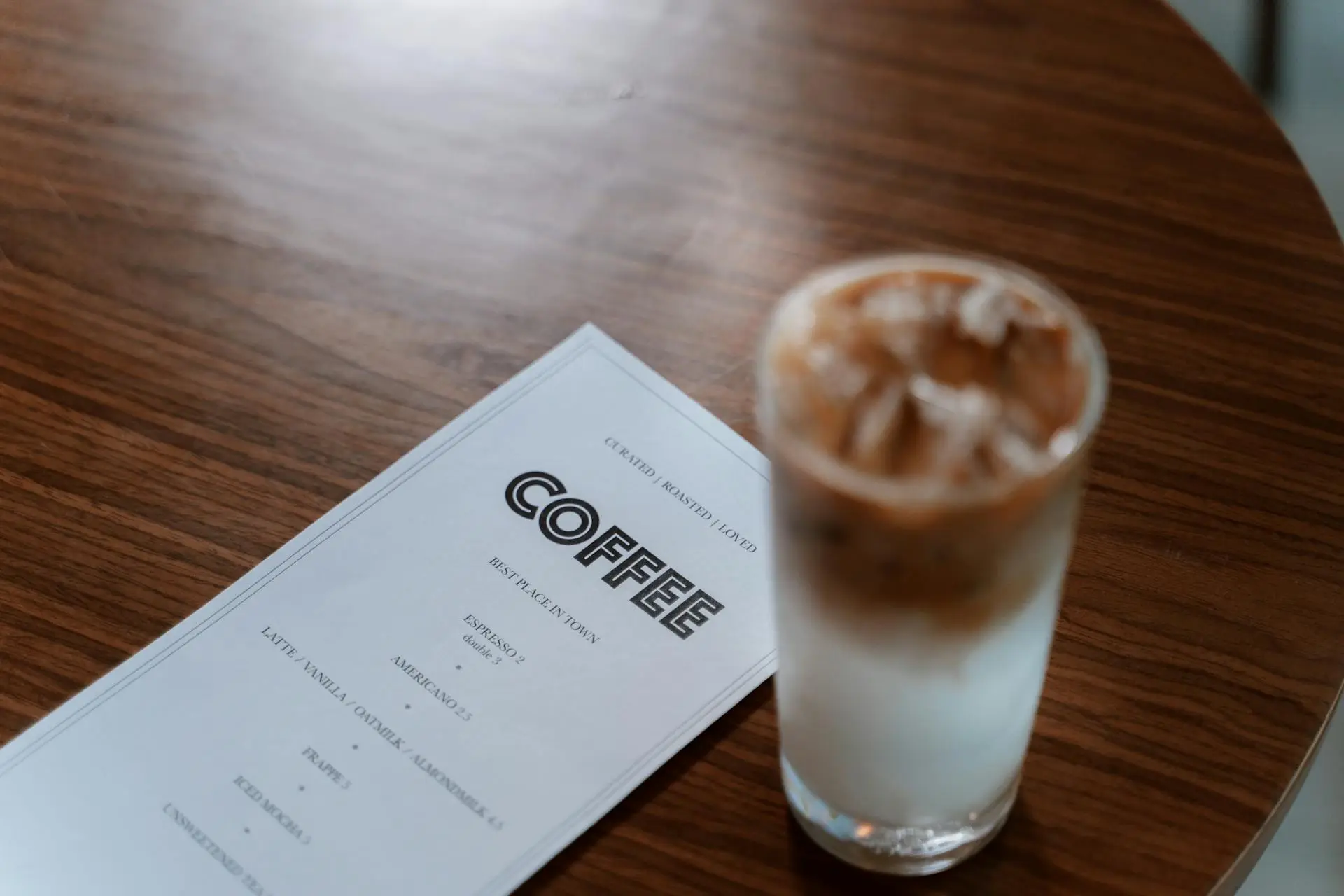
15 Proven Coffee Shop Menu Ideas You Can Use Today
Simple Menu (6 Items) — Best for New Cafés
Espresso $3.25 | Americano $3.75 | Latte $4.25 | Iced Tea $3.25 | Croissant $3.75 | Muffin $4.25
This is your foundation. Start here. Add items only after you know what your customers actually order.
Specialty Menu (12 Items) — Best for Established Cafés
Add nitro cold brew, pour over, matcha latte, chai latte, iced matcha, and one seasonal special to your core six. Keep food to four items maximum.
Grab and Go Menu — Best for High Traffic Locations
Breakfast sandwich $6.75 | Yogurt parfait $4.95 | Energy balls $2.50 | Drip coffee $3.25 | Cold brew $4.75 | Bottled water $2.00
Speed is everything in grab and go. Every item should be ready in under 60 seconds.
High Traffic Menu — Best for Morning Rush Focused Cafés
Add chai latte, iced matcha, and protein smoothies to your core drinks. Keep food simple: two pastry options and one hot item. Change the hot item monthly to maintain interest without adding operational complexity.
Free Coffee Shop Menu Design Checklist
Before you print or publish your menu, run through this list:
- 8 to 12 items maximum total
- Highest margin drinks listed first
- Photos included for top 3 to 4 items
- Clear sizes and prices on every item
- Food items share ingredients with drinks where possible
- Seasonal limited time offer section included
- Digital QR version ready alongside print version
- Allergen information visible
- Menu reviewed by someone who has never seen it before
That last point matters more than most owners realize. Hand your printed menu to someone unfamiliar with your café and watch where their eyes go first. If they do not land on your highest margin items within five seconds, your layout needs work.
5 Common Coffee Shop Menu Mistakes
Mistake 1: Too Many Items
A menu with 30 items does not signal variety to customers. It signals indecision. Cap your total at 10 to 12 items and watch your average order time drop and your waste percentage follow.
Mistake 2: Low Margin Food Items
Salads, wraps, and hot food that require separate prep equipment destroy margins and add complexity your team does not need during a morning rush. Stick to pastries and light bites that your supplier delivers fresh daily.
Mistake 3: Confusing Layout
If a customer has to work to find the price or figure out what a drink contains, you have already lost the sale or slowed the line. Drinks on the left, food on the right, prices tucked naturally into each item description.
Mistake 4: No Photos or Poor Quality Photos
A blurry phone photo of a latte does more damage than no photo at all. Use high resolution images for your anchor items or use none at all. Canva and most print shops can recommend photographers who specialize in food if you need help.
Mistake 5: Treating the Menu as Permanent
Your menu should change. Ingredient costs change. Customer preferences shift. Seasonal items come and go. Build a quarterly review into your operations calendar from day one.
Build Your Menu. Then Build Your Business Around It.
You now have everything you need to create a coffee shop menu that drives sales, protects margins, and gives your team a system they can execute consistently under pressure.
Start with the seven part structure. Follow the step by step build process. Use the checklist before your first print run. Test with real customers. Remove what does not sell. Update every 90 days.
A well built menu is not just a list of drinks. It is one of the most important operational decisions you will make in your first year.
If you are opening a café and want expert guidance on menu pricing, bar design, business planning, and full operational setup, Pro Café Consulting works with café owners at every stage. Based in Darien, CT and serving coffee entrepreneurs nationwide. Book a consultation to get started.
Frequently Asked Questions
How do I build a coffee shop menu from scratch?
Start with five core drinks and three food items. Price for 70 to 80% margins. Design using warm colors and a clear visual hierarchy. Test with real customers for two weeks before finalizing. Remove anything in the bottom 20% of sales.
How do I make a menu for my café if I have no design experience?
Canva has free café menu templates that are genuinely effective starting points. Choose a template, swap in your items and prices, and test it printed on plain paper before spending money on professional printing.
What are the 7 parts of a coffee shop menu?
Header and branding, core coffee drinks, non coffee drinks, food pairings, specials and limited time offers, pricing strategy, and allergen or legal notes.
What are good coffee shop menu ideas for a startup?
The six item simple menu above is where most successful cafés start. Espresso, Americano, latte, one iced drink, one non coffee option, and one pastry. Master those six before adding anything else.
What does a simple coffee menu look like?
Six items, warm design, clear prices, no photos required at launch. The example in the menu ideas section above is a proven starting point you can customize for your concept and market.